
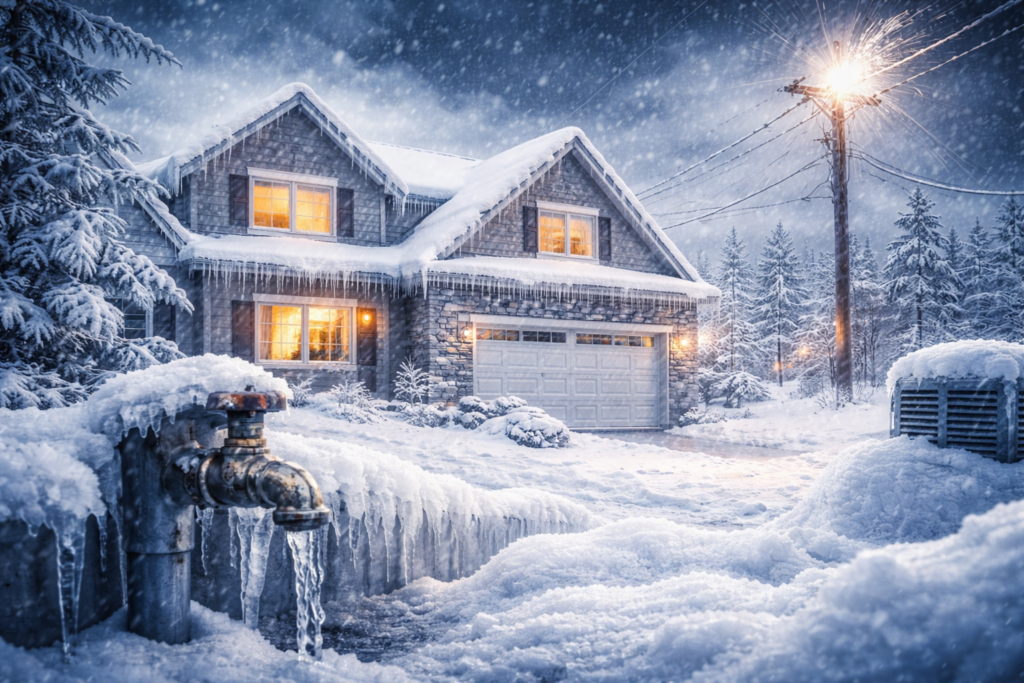
Michigan winters bring freezing temperatures, heavy snow, and rapid freeze–thaw cycles that increase the risk of frozen pipes, roof leaks, ice dams, and interior water damage.
Winter storm damage occurs when prolonged cold, snow accumulation, or fluctuating temperatures create structural stress, plumbing failures, or moisture intrusion inside the home.
Homes throughout Macomb County and Metro Detroit are especially vulnerable due to basements below grade, older plumbing systems, and roofing exposed to heavy snow loads.
Here’s how to reduce risk—and what to do if damage occurs.
Protect Your Pipes From Freezing and Bursting
Frozen pipes are one of the most common causes of winter water damage in Michigan.
Pipes in basements, crawl spaces, garages, and exterior-facing walls are particularly vulnerable during extreme cold.
To reduce risk:
Insulate exposed plumbing lines
Seal drafts near foundation walls and rim joists
Use heat tape in high-risk areas
Keep indoor temperatures consistent
Let faucets drip during prolonged subzero conditions
A burst pipe can release hundreds of gallons of water within hours, leading to structural damage and mold growth if not addressed quickly. If this happens, immediate professional water damage restoration is critical to prevent long-term structural and moisture issues.
Prevent Ice Dams and Roof Leaks
Ice dams form when heat escapes from the attic, melts snow on the roof, and refreezes at the eaves. Water backs up under shingles and enters the home.
To prevent ice dam damage:
Keep gutters clear before snowfall
Remove heavy snow buildup with a roof rake
Improve attic insulation and ventilation
Inspect flashing and shingles before winter
Interior signs of roof-related winter damage may include ceiling stains, peeling paint, or moisture in attic insulation.
Maintain Your Heating System
Heating failures during a cold snap can trigger pipe freezing and unsafe indoor conditions.
Before peak winter weather:
Schedule furnace inspections
Replace air filters regularly
Test thermostat performance
Ensure vents remain unobstructed
Consistent indoor heat protects plumbing and structural materials during extended cold periods.
Create a Winter Emergency Plan
Preparation reduces damage severity when weather conditions escalate.
Homeowners should:
Know the location of the main water shutoff
Keep emergency supplies available
Save contact information for restoration professionals
Monitor local weather alerts during extreme cold events
Quick action during a winter emergency can significantly reduce repair costs.
When Winter Damage Happens
Even with preparation, Michigan homes can still experience:
Frozen and burst pipes
Ice dam roof leaks
Basement flooding from thaw cycles
Storm-related structural damage
ConstrucTeam provides 24/7 storm damage restoration services across Macomb County and Metro Detroit, handling everything from emergency water extraction to structural stabilization.
If winter storm damage affects your home, immediate mitigation helps prevent further structural issues and mold growth.
If your home experiences winter storm damage, fast stabilization is critical. Our emergency restoration team serves homeowners throughout Macomb County and Southeast Michigan.
Frequently Asked Questions:
Winter Storm Damage Repair Macomb County
What should homeowners do to prevent frozen pipes?
Insulate exposed pipes, maintain consistent indoor heat, seal drafts, and allow faucets to drip during extreme cold to reduce freezing risk.
How can I prevent ice dam damage on my roof?
Improve attic insulation and ventilation, clear gutters before snowfall, and remove heavy roof snow buildup to reduce melt–refreeze cycles.
What are early signs of winter water damage?
Ceiling stains, musty odors, warped flooring, and unexplained moisture near baseboards may indicate hidden water intrusion.
Does winter storm damage require professional restoration?
Yes. Water from burst pipes or roof leaks can penetrate framing, insulation, and drywall. Professional drying and moisture monitoring help prevent mold growth and structural deterioration.